Why Trauma Makes Positive Emotions Difficult
1. Lasting Impact on the Brain and Body
Trauma can cause lasting changes in the brain’s emotional circuits, especially those linked to reward and pleasure. Research suggests that people with posttraumatic stress disorder (PTSD) often experience a persistent reduction in their capacity for positive emotion, not just in stressful moments but across daily life. This means that even when something good happens, it might not spark the same joy or satisfaction as before.
2.Trauma memories are stored differently
Trauma memories seem to get locked in the nervous system with the original picture, sounds, thoughts, feelings and so on.
The brain seems to be overwhelmed and unable to process the experience like a normal memory. Since the experience is locked there, it continues to be triggered whenever a reminder comes up. It can be the basis for a lot of discomfort and sometimes a lot of negative emotions such as fear and helplessness that we can’t seem to control. These are really the emotions connected with the old experience that are being triggered.
3.Trauma Reminders Block Good Feelings
Thinking about trauma—even unconsciously—can dampen positive emotions. When the mind is preoccupied with reminders of what happened, it’s harder to be present and enjoy positive experiences. Another way we try to reduce discomfort is to push away painful thoughts and feelings. This can lead to feelings of numbness, where you find it difficult to have both fearful and pleasant or loving feelings. Sometimes the painful thoughts or feelings may be so intense that your mind just blocks them out altogether, and you may not remember parts of the trauma. This effect isn’t limited to those with PTSD; anyone who’s experienced trauma can struggle with this.
4. Positive Emotions Can Feel Unsafe
For some, feeling good triggers anxiety. This can lead to avoiding situations that might bring joy, just to stay “safe.” After trauma, people may become judgmental or suspicious of positive emotions—worrying that happiness is fleeting or that feeling good will make them vulnerable to disappointment or harm. This self-protective stance can make it hard to relax into positive experiences.
How to Practice Receiving Good Feelings
The good news: You can heal from trauma and retrain your brain and body to accept and enjoy positive emotions. Doing this can help you begin to feel safer again. Here’s how to start:
1.Notice Small Moments of Goodness or ‘Glimmers’
Glimmers are the opposite of triggers. Look out for tiny sparks of joy or beautiful things—a warm cup of coffee, a favourite song, a kind word, a tree in blossom.
Practice mindfulness by naming these moments (“I feel a little lighter I this moment”).
2.Challenge Judgmental Thoughts
When you catch yourself thinking, “I don’t deserve this” or “This won’t last,” gently remind yourself that everyone deserves good feelings, including you. We can’t predict the future. Try to let go of the urge to analyse or dismiss positive experiences.
3. Allow Positive Emotions to Grow
When you feel even a hint of happiness or peace, pause and let yourself breathe it in for a few seconds longer. Imagine the feeling spreading through your body, and strengthening even if it’s faint at first.
4. Practice Self-Compassion
Trauma can make it hard to trust good things and to feel hopeful, but that’s not your fault. Treat yourself with the same kindness you’d offer a friend who’s struggling to feel happy. Read more about this here (https://www.tarabrach.com/rain/).
5. Seek Out Safe, Enjoyable Experiences
Spend time with people who make you feel safe and valued and who get what you have been through. Do activities you used to enjoy, even if they don’t feel as rewarding at first—sometimes the pleasure returns gradually.
6. Work With a Therapist
Therapies that help you learn ways to move through your emotions and self sooth can help you learn to accept and learn to enjoy positive emotions again.
In EMDR, alternating left-right stimulation of the brain with eye movements or sounds or taps is used. These seem to unlock the nervous system and allow the brain to process the experience. This is similar to what happens in REM or dream sleep: the eye movements may be involved in processing the unconscious material.
Disturbing events can be stored in the brain in an isolated memory network. This prevents learning from taking place. The old material just keeps getting triggered over and over again. In another part of your brain, in a separate network, is most of the information you need to resolve it. It’s just prevented from linking up to the old stuff. Once processing starts with EMDR, the two networks can link up. New information can come to mind and resolve old problems.
In successful EMDR therapy, the meaning of painful events is transformed on an emotional level. For instance, shifting from feeling horror and self-blame to holding the firm belief that, "It’s in the past, I got through it and I it wasn’t my fault."
Remember: Healing Takes Time
If you find it hard to feel good after trauma, you’re not alone—and you’re not broken. Your brain and body are doing their best to protect you, even if it means keeping joy at a distance. With patience and practice, it’s possible to reclaim happiness, connection, and peace. Start with small steps, be gentle with yourself, and know that every moment of goodness you let in is a step closer towards healing.
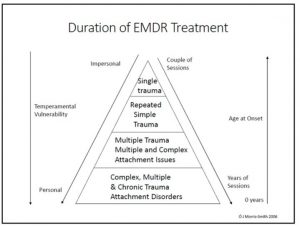
EMDR therapy is an evidence-based and effective approach for processing trauma, but it is not a quick fix. The duration of treatment varies depending on the complexity of the trauma, emotional regulation capacity, and individual needs.
- Single-event trauma: Typically takes 8-20 sessions.
- Complex PTSD/ multiple traumatic events over time: Requires a longer-term approach, sometimes lasting several months to years.